Ganpati · Tradition away from home
Bringing Ganpati Home in the UK
Bappa can travel a long way from home. The tradition doesn't have to be left behind — a little shadu maati, a bucket of water, and a quieter kind of visarjan.

Bringing Bappa home is the easy half.
You find a place for him. Someone brings out the good thali. Flowers appear. A diya is lit. If there are children in the house, they will almost certainly have opinions about where everything should go.
And for a little while, a corner of a home in London, Leicester, Birmingham or somewhere much quieter feels connected to another home thousands of miles away.
Then comes the part that is harder to recreate here.
Visarjan.
In India the image is almost instinctive — Ganpati carried out amongst family, neighbours, colour, noise and Ganpati Bappa Morya. But what happens when the nearest water is the Thames, a canal or the local park lake, and putting a murti into any of them isn't something you can simply do?
The answer is wonderfully uncomplicated.
You bring the tradition home too.

There is a reason the material matters
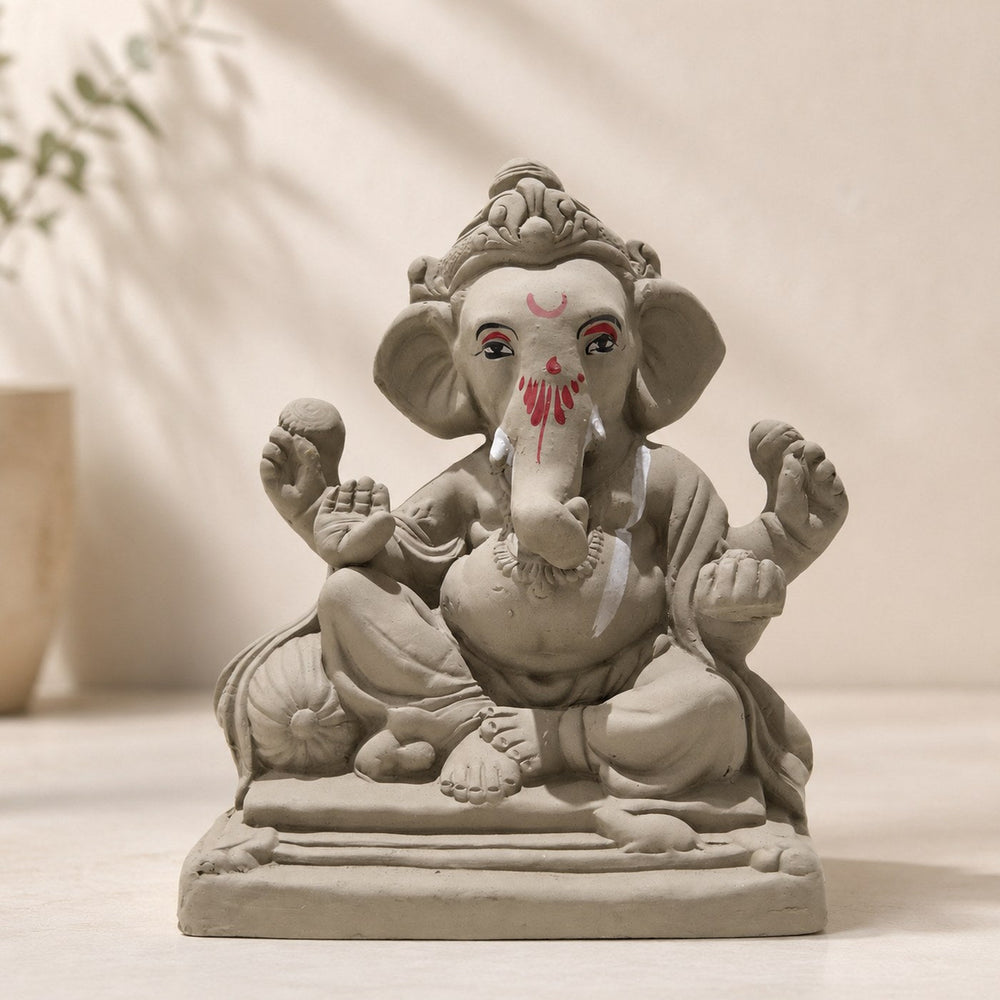
Shadu maati isn't chosen simply because it looks beautiful. Clay is part of what allows the story of Ganpati to have its proper ending.
Placed in water, natural clay slowly softens. Edges disappear first. Details begin to loosen. Eventually the form we welcomed into our home returns to the material it was made from.
That impermanence isn't a flaw in the murti. It is part of its purpose.
Plaster of Paris behaves very differently. It doesn't readily return to the earth in the same way, which is why we insist on shadu clay for the Ganpatis we sell for immersion.
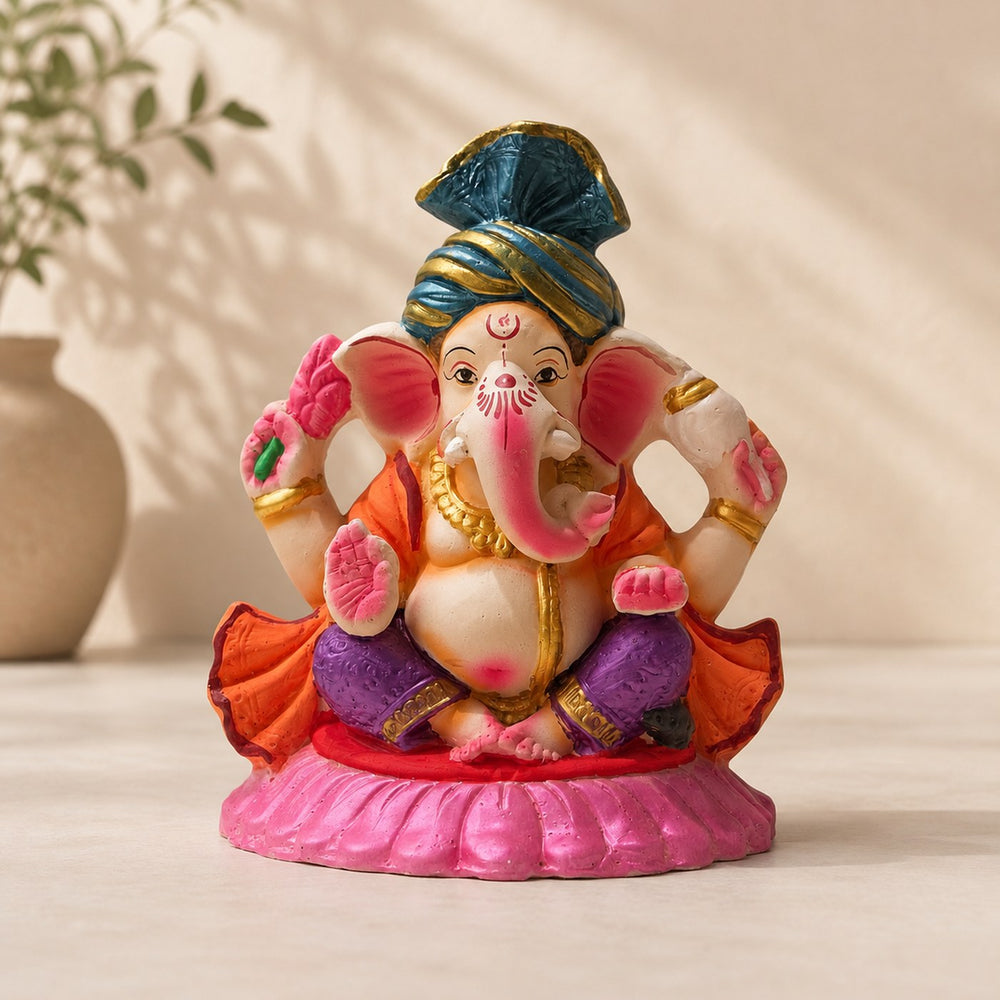
Our painted murtis use natural organic colours chosen with immersion in mind too. The colour may make Bappa a little more flamboyant while he's visiting, but underneath he is still shadu maati.
The fact that the murti does not last forever is not its limitation. It is part of the tradition.
So how do you do visarjan in a British home?
The lovely thing is that you need remarkably little. A clean bucket, large bowl or tub. Tap water. A quiet place. And some time.
Place Bappa gently into the water.
And then — don't rush him.
Depending on the size of the murti and the temperature of the water, shadu clay can take several hours to soften and disperse. You don't need to stir it furiously or stand over it waiting for something dramatic to happen. Let the water do the work.
For families with children this can become one of the most meaningful parts of the celebration. They can see what visarjan represents, rather than simply watching the murti disappear into distant water.
The form gradually returns to clay. The visit is complete.

And what about the river?
This is the one part of celebrating Ganpati in the UK where tradition has to adapt to where we live.
Please don't place your murti into a river, canal, lake or the sea. Depositing solid material into open water is regulated in the UK, and religious observance doesn't create a general exemption. Where public visarjan takes place, it should be through an organised event with the appropriate permissions.
That can initially feel like something has been taken away from the tradition.
We don't think it has.
A bucket of water at home may not have drums, crowds or a procession behind it. But gather the family around it, say your prayers, share that last moment with Bappa and allow the clay to return to the earth — and the meaning hasn't become any smaller.
Perhaps it has simply become more intimate.
What stays behind
Visarjan is an unusual kind of goodbye. We spend days making a place beautiful for Ganpati and then, deliberately, let the most important thing in it go.
But the home doesn't return entirely to how it was.
The thali is washed and put away. The diya goes back into its cupboard. Perhaps the cloth is folded carefully. Someone finds a stray marigold petal behind something a day later.
Next year, those things come out again. Someone remembers where the diya went. Someone says the decoration looked better the year before. The children are a little taller. Another Ganpati — never quite identical to the last one — takes his place amongst familiar things.
And slowly, almost without noticing it, you have made a family tradition.